NutriSpy

Hashimoto and nutrition: keep your nutrients and symptoms in view

Selenium, iodine, zinc, iron and vitamin D, week after week.

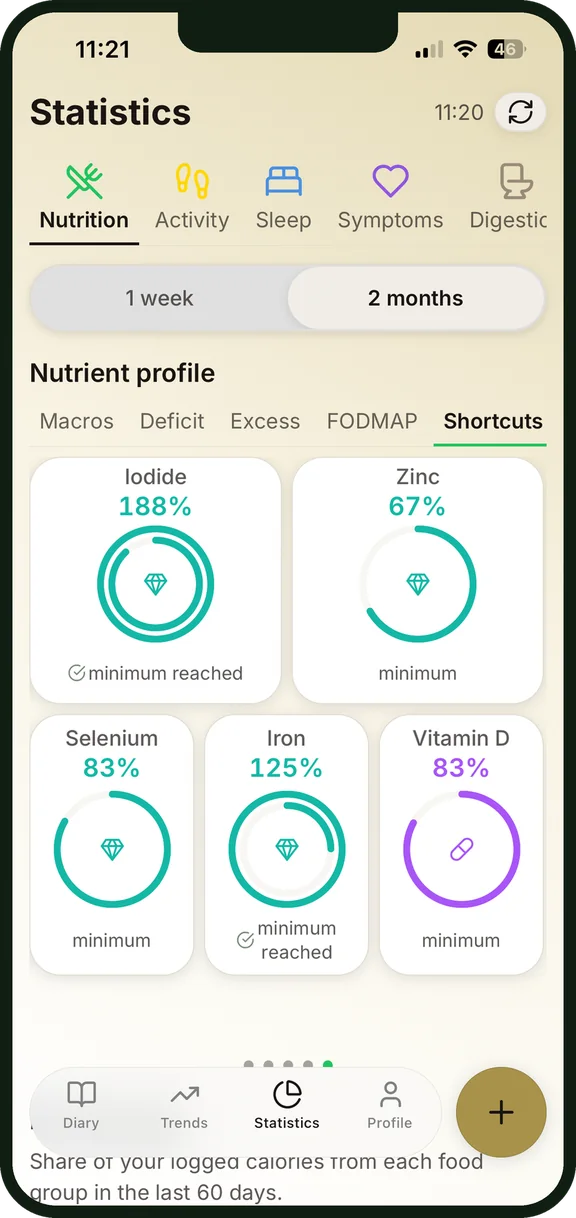
Iodine, zinc, selenium, iron and vitamin D in the nutrient profile

Why a diary helps after a Hashimoto diagnosis

After the diagnosis, most of it is still guesswork. The thyroid is being settled onto a dose, the days stay uneven, and the internet says something different about every food. Change everything at once and you learn nothing about which part of it helped.

A food diary asks your own days instead: what did the day look like when you felt good, and what went with every tired afternoon?

What your diary keeps

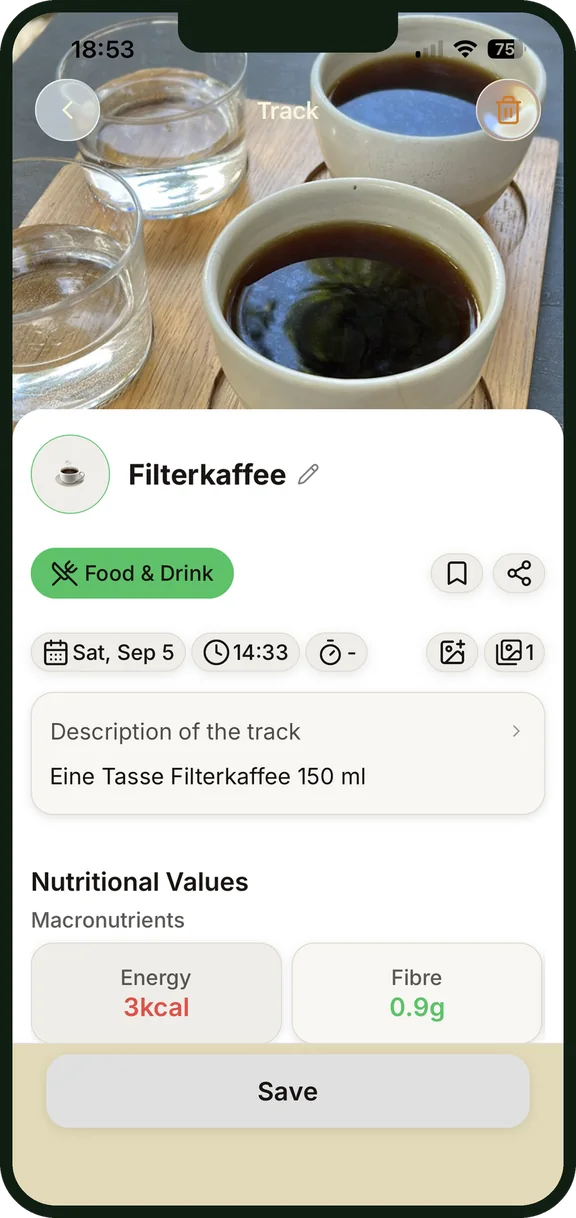
An entry with a photo in the NutriSpy diary

A meal in one sentence

By voice, photo, barcode or text

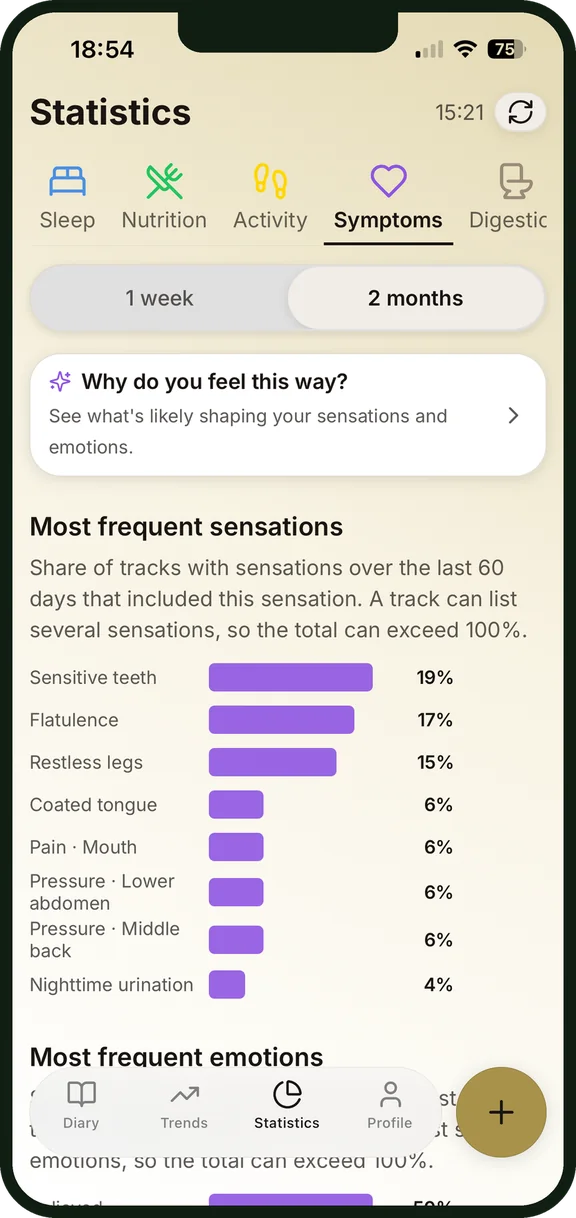
Most frequent symptoms in the statistics

Your most frequent symptoms

Over two months, at a glance

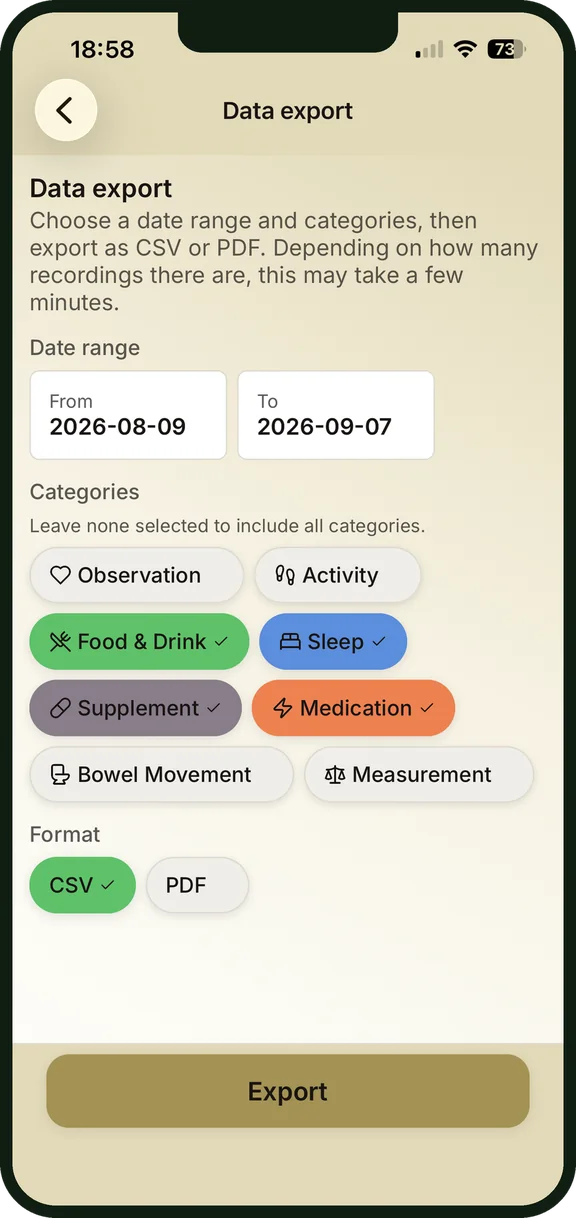
Data export as CSV or PDF

For the doctor's appointment

Premium: as a PDF or CSV

Frequently asked questions

Which nutrients come up most often with Hashimoto?

The ones named most often are selenium, iodine, zinc, iron and ferritin, plus vitamin D and B12. NutriSpy carries them under every meal so you can see how much your food actually delivers. The statistics show where you sit low week after week. What follows from that for you – with iodine especially – is a conversation with your doctor; the app recommends no amounts.

Can I enter my lab values?

Yes. TSH, T3, T4, ferritin, iron, vitamin D and B12 go in as your own measurements whenever a result comes back. They then sit on the same timeline as your meals, your sleep and your weight – they are not interpreted, that stays with the result.

Can I log my thyroid medication?

Yes. Medication and supplements are logged with their times, thyroid medication as its own category. While you are being settled onto a dose, that leaves you with a record of what arrived when. NutriSpy suggests no dose and changes nothing about your treatment.

Which symptoms can I log?

Fatigue, feeling cold, trouble concentrating, digestion, mood – named as a symptom, with a timestamp. Sleep and workouts arrive automatically from Apple Health or Health Connect.

How quickly do I see results?

After five logged days, NutriSpy explains how you feel from your own data: which meals and habits go with your better and your worse days. Every pattern comes with an assessment of how solid it is – so you don't rearrange your diet on a suspicion that never held. Missing days are treated as missing, not guessed.

Does the diary replace a diagnosis?

No. A diary shows what goes together in your own data – it does not diagnose. NutriSpy never names a condition and never suggests a medication. What lies behind it is for your doctor; the diary is the basis for that conversation.

What does NutriSpy cost?

Your diary is free. AI-powered logging is part of Premium, with a few free entries each month. The insights, syncing into Apple Health or Health Connect and the export belong to Premium as a subscription. Current prices are shown in the app.

Rather start on paper? Here is the printable PDF template.

Start your food diary today

More about NutriSpy: Home · IBS & intolerance · Histamine food diary · Acid reflux food diary · Weight loss · Building muscle · Fiber tracker · Printable template · Connect a wearable · All topics

NutriSpy is not a medical device and does not diagnose.